Tuesday, August 21, 2012

Building Backyard Projects with Lumber from a Portable Sawmill

Sawing lumber for the farm

As stewards of our land and resources, we cultivate and care for what’s been given to us. One way that many people are becoming even more self-sufficient is in the way that they obtain lumber for projects around the farm and in their back yards, using a small personal sawmill.

You can mill your own wood a lot easier than you might think. Small portable sawmills are making it possible for anyone to be able to cut their own boards for garden sheds and other backyard building projects. These one-man mills take up little space, and fit nicely into a garage or set up in the backyard.

Jim Oseychuk of Ontario, Canada, not only used his Wood-Mizer sawmill to saw all the lumber for his house and deck, but also for his garden shed.


Jim Oseychuck's backyard garden shed, which he built all from self-sawn lumber

“We were standing in our old raspberry patch,” he recalls, “when my wife suggested that we rip it all out and construct a garden shed.  I had been saving some fir logs that had enormous curves, mostly caused from growing on steep rocky slopes. For conventional purposes, they were quite worthless.  But from a creative sense, they were very unique.  This was my chance to use them!” 

What was originally meant to be a simple backyard shed became a masterpiece of creativity and craftsmanship.   His wife, an “original North Carolina girl with a love of gardening,” got her much anticipated and award-winning garden shed.

Danny Hamsley (Hawkinsville Georgia) uses his portable sawmill to harvest trees that fall down in storms, saws them into lumber, and then builds custom furniture, or sells the lumber to local woodworking hobbyists. 

The enjoyment of actually sawing lumber yourself is only one of the benefits that come from using a portable sawmill. You have the choice of where your wood comes from, and do not have to limit yourself to just what is on the store shelf. You can get your wood in ways that allow you to be a good steward of natural resources. Trees that often end up as firewood can be turned into valuable lumber instead. The milling process produces sawdust that can be combined with your compost pile as well.

Most portable sawmill owners feel that their investment pays for itself after only a couple of projects. And it’s a gift that keeps on giving, giving you years of enjoyment and the ability to produce your own wood for you and your neighbors.

Danny with a fresh stack of lumber, ready for drying.
Learn more about sawing your own lumber at www.woodmizer.com. Wood-Mizer carries a full line of portable sawmills, from entry level mills to mills with advanced hydraulic log handling functions. Order your free portable sawmill catalog here.

See Wood-Mizer saw mills in action in the video below.

Thursday, August 9, 2012

Massive Wood-Mizer Sawmill provides new Profits for Portland Hardwood Supplier


Meet Art Blumenkron. This forward-thinking, eco-minded owner of Goby Walnut & Western Hardwoods has recently installed an extra-sized thin-kerf Wood-Mizer sawmill to maximize profits for his business and minimize his impact on the environment.


The Pacific Northwest is well known for its towering tracts of evergreen forests. One Oregon company, however, is making a name for itself by tapping into the wooden treasures found within a different natural resource: dead, dying, and diseased hardwoods. Goby Walnut &Western Hardwoods is seeing worldwide sales due to their impressive product offering, and is leading the way in using environmentally responsible & profit enhancing business practices.

Started over 35 years ago by Gary Goby, the company was purchased in 2007 by Art Blumenkron, an entrepreneur who was looking for a break from the high stress of his dental equipment manufacturing business.  He was ready to invest his time and money into something more rewarding. That’s when he discovered Goby Walnut, being run from Gary Goby’s home outside of Albany, Oregon.

A large Walnut slab, up to 75" wide, in inventory

Art realized that the growing specialty hardwood supply company had untapped potential, and after making the purchase, he moved the company to the Northwest Industrial area of Portland, hired additional employees, and invested in a professional website displaying their inventory of hardwood slabs, figured boards, tone wood billets  and veneers. Art’s changes are having their intended effect. The company processes 50% more logs, and sales have tripled since 2006.

Goby Walnut buys trees from Arborists, municipalities, parks and individual landowners within a couple hundred mile radius of their Portland location. They look for trees from two to over seven feet wide, and will pay from $500 to $20,000 for the right tree. These logs are milled into slabs, boards, and veneers that all fetch premium prices from high end furniture makers, musical instrument craftsmen, and woodworking hobbyists. Two of the rough sawn figured Oregon Black Walnut slabs on the company’s website are priced over $10,000, but Art also supplies boards and remnants for under $100.

With the increased sales and growing worldwide demand, Art saw the need to further expedite his milling and drying processes. He had been milling the huge hardwood slabs with chainsaw and swingblade mills, but knew that there had to be a more efficient way to accurately saw the premium logs and decrease the amount of precious wood being wasted in sawdust.

The WM1000 cuts down on sawing time, while improves yield

Familiar with Wood-Mizer’s thin-kerf  portable and industrial sawmills, he learned about Wood-Mizer’s most recently released machine, the WM1000 thin-kerfheadrig, which can saw a 67” log in half while only losing 1/8 of an inch in sawdust each pass. Art weighed the cost of the machine with its increased efficiency, cut quality, and unbeatable material recovery, and knew he had found exactly what he needed to maximize his profits from his logs.

With the WM1000 installed at his facility, and running full-time every day, Art is confident that the machine will pay for itself quickly. Every log cut yields an extra slab each time. Each large slab in his inventory ranges from $1,000 to $10,000 dollars each, which means a significant increase in profitability coming from the new mill.
"We recently cut a 15 foot, 48” diameter walnut log and were amazed to find that the thickness of the slabs didn’t vary by more than 1/32” over the whole 15 feet. Our finish on the slabs is much better than [our previous mill] and we yield an extra slab on every log. Another consideration is time…it takes about 10 minutes to complete a cut on a large slab…."  
Art Blumenkron
But the uses for this machine are not limited to just cutting premium slabs. “The WM1000 is great for any kind of sawmill business that deals with large logs, whether it be parting logs so they can be milled or sawing large slabs. It’s a lot of machine for the money!” Art explains.

Large slabs for furniture makers are not the only wood product offered by Goby. Gunstock blanks in three different varieties of walnut, cherry, maple and myrtle are available for muzzleloaders, rifles, and shotguns. Craftsman of musical instruments can find Oregon Walnut and Big Leaf Maple tonewood for most stringed instruments, providing superior sound and looks for the musical instrument.

For woodworkers, walnut veneers, book matched boards, turning blocks, remnant wood boards and blocks are available. Goby Walnut’s inventory also boasts large walnut, maple, redwood, and myrtle burls for tabletops.  

Art is continuing to research how to make his business more efficient and profitable. Right now he is sawing many smaller hardwood logs on the WM1000, which takes time away from sawing the big logs. He is looking at remedying that problem by putting in a Wood-Mizer industrial WM3500 to handle all his smaller hardwood logs and let the WM1000 concentrate on the big logs.  Art is also working with kiln manufacturers to see if he can utilize new kiln technologies to speed up the drying process while maintaining the integrity of the wood. Large hardwood slabs presently take 1-3 years to completely dry and be ready for resale. He would consider his investment worth it if he could process those same slabs within months instead of years.

To learn more about what Goby Walnut & Western Hardwoods offers, visit www.gobywalnut.com to learn more about the company and to browse their extensive inventory of hardwood slabs for sale.
Visit www.woodmizer.com to learn more about the WM1000 and other industrial sawmills that are giving sawmill operations additional profitability from their logs.

Ways that Goby Walnut & Western Hardwoods is making more profits by being environmentally conscious.
  • Uses the WM1000 thin-kerf headrig to maximize profits and minimize sawdust from premium hardwoods
  • Uses sustainable tree harvesting practices, and is in the process of being “SmartWood” certified
  • Uses waste wood to heat his buildings and saves thousands on energy bills
  • Installed more efficient lighting in his warehouse, and will save even more on his energy bills
  • Is developing a way to market walnut shavings as a natural weed suppressant.

Friday, July 27, 2012

Wood-Mizer Takes Applications for Professional Sawyer Program


An opportunity for actively sawing Wood-Mizer sawmill owners to boost long-term success

Wood-Mizer Pro Sawyer Network

Wood-Mizer Products is taking applications for a new customer program, the Pro Sawyer Network, designed to boost the success of sawmill businesses and owners throughout the United States.

Members of the Pro Sawyer Network will have access to exclusive opportunities to increase the profitability of their sawing endeavors. Although Wood-Mizer has had components of the new program in place for many years, the Pro Sawyer Network brings all the benefits into one program that has involvement options that members can select themselves, such as being referred to new customers looking for a local sawing service, and demonstrating their sawmill for credit on account. More information on involvement options can be found on the online PDF application.

“Many sawmill owners and businesses have experienced some tough times in the last few years. Our desire with the launch of the Pro Sawyer Network is to funnel more opportunities for profitability directly to our talented customers that offer so much to their communities,” commented Wood-Mizer’s National Sales Manager, Dave Mann. 

The formation of the Pro Sawyer Network will also provide a local resource to individuals who want to hire a sawyer to cut their logs into lumber. Currently, Wood-Mizer offers an online request form that can be used to obtain the contact information for a local sawing service. According to Wood-Mizer’s Dave Mann, this online tool has been very successful in connecting people to sawyers-for-hire, and he says that they have plans for a more robust version of the tool down the road.

Wood-Mizer sawmill owners can apply for membership to the Pro Sawyer Network online at woodmizer.com/pro, or request a form in the mail by calling 800.553.0182. Membership is free of charge, and some qualifications apply. Members of Wood-Mizer’s previous “Custom Cutting” and “Owner Demonstration Credit” programs are required to reapply if they desire to transition to the Pro Sawyer Network.

Keys to Success from 57 Years of the Sawmill Business

The Baize Family team. Author Jordan Baize to the far right.
By Jordan Baize

Family photo from 1981
In today’s economy, a few years in business is something to be proud of, not to mention almost 6 decades.  Our family’s lumber manufacturing company, B& K Wood Products, is celebrating its 57th anniversary this April.  Companies like ours and Wood-Mizer haven’t just been lucky over the years or stumbled into good fortunes.  Our company has instead formulated a Company Philosophy for longevity and growth made up of some of the simplest ideas known to man, and I’d like to share these principles with you.  Caution: this is much simpler than what they teach you in business school!  Let’s get started.


Integrity - Establish relationships with business partners with a handshake and a solid word.

Not many companies can say they are selling to some of the same customers as they were 40 years ago, but ours can.  There’s no easy, cheap, or quick way of getting customers to buy the same product from your for more than four decades.  There is only one way to accomplish this: treat your customer with integrity.  Look at the customer-vendor relationship as a marriage. In 40 years, the customer will have plenty of time to find the faults in you (and there always are a few faults in all of us).  But if you have treated your customer with integrity for the length of the relationship, they should care enough about your organization to overlook those faults, or at least give you time to correct those faults without dropping you first.

Milling in 1959

Organizations should make it a point to serve customers, not just push products their way.  In the end, the only thing that generates customer retention is positive relationships that are built on integrity.  If the waitress at your favorite pizza joint is rude and unhelpful, the pizza you once enjoyed will start tasting worse and worse.  No product is good enough to overcome poor relationships.  Integrity wins in the end every time.  Not to mention it just feels good at the end of the day to be able to hold your head high.  Try it! It’s worked for us.

Diversification - Offer a wide array of products and services.


 Our company was started over 50 years ago as a side lumber and crossties operation only.  Today, sawmilling is still a big part of what we do, but it is not the only thing we do.  Nor will it ever be again.  We have adopted a more diverse range of products than just the standard lumber and tie variety out of necessity.  This has always been a strategic position of ours, and it proved its worth in 2009.  Countless friends and competitors of ours shut their doors for the last time that year.  At the time, most of them were still cutting the same side lumber and crossties we were cutting 50 years prior.  There is nothing wrong with consistency, but when times change, we must change with them or risk looking failure in the face. 

One of B&K's Wood-Mizer Industrial Headrigs
Diversifying your products and services to cover varying areas of the market is a necessity.  For instance, during the heart of the economic crisis when the housing market had tanked, we were not able to sell much of our inventory that ends up as cabinet facings, hardwood flooring, or stair treads.  Instead, we had to lean heavily on other products that we produce and divert those revenue streams (which were quickly drying up) down other avenues.  A few years back our wood chip market was soft so we went looking for another way to capitalize on our wood waste.  Because of that diversification, we are now Kroger’s largest producer of manufactured firewood, a new use for the same material our wood chips once came. 

Whatever It Takes – Manufacture products of unquestionable quality using both trail-blazing technologies and beaten-path tools of the trade.


  Our company has been around for a while and learned many things over the years.  We pride ourselves in not forgetting the many lessons learned through the decades, all the while not neglecting newer technologies and good, old-fashion hard work.  We feel like that is simply the only way to be consistently profitable in business.
Another Wood-Mizer thin-kerf headrig at B&K Wood Products
When our organization sets up a production goal, we meet that goal. Period.  Budgets and forecasting are useless if the top number on the income statement (gross revenue) is lower than expected.  Companies must aim to produce quality products in the expected timeframe.  Anything short of that changes the financial landscape of the company.  Use all resources necessary to get the job done on time—whatever it takes.

Thrive, Don’t Survive!

The B&K Wood Products facility

The simple active application of these ideals to our business has resulted in longevity spanning 57 years.  It’s important to remember that most people who have been successful have taken a few easy-to-understand principles that their grandfather could have taught them, and followed them without wavering.  Instead of avoiding failure, business owners and managers should instead be trying to attain greatness and longevity.  Thrive, don’t just survive—let’s go the distance!

For more information on products that have helped B&K succeed, visit woodmizer.com. Also, to see how thin-kerf headrigs can help your business increase profitability, watch this video: Ohio Valley Veneer

Friday, July 13, 2012

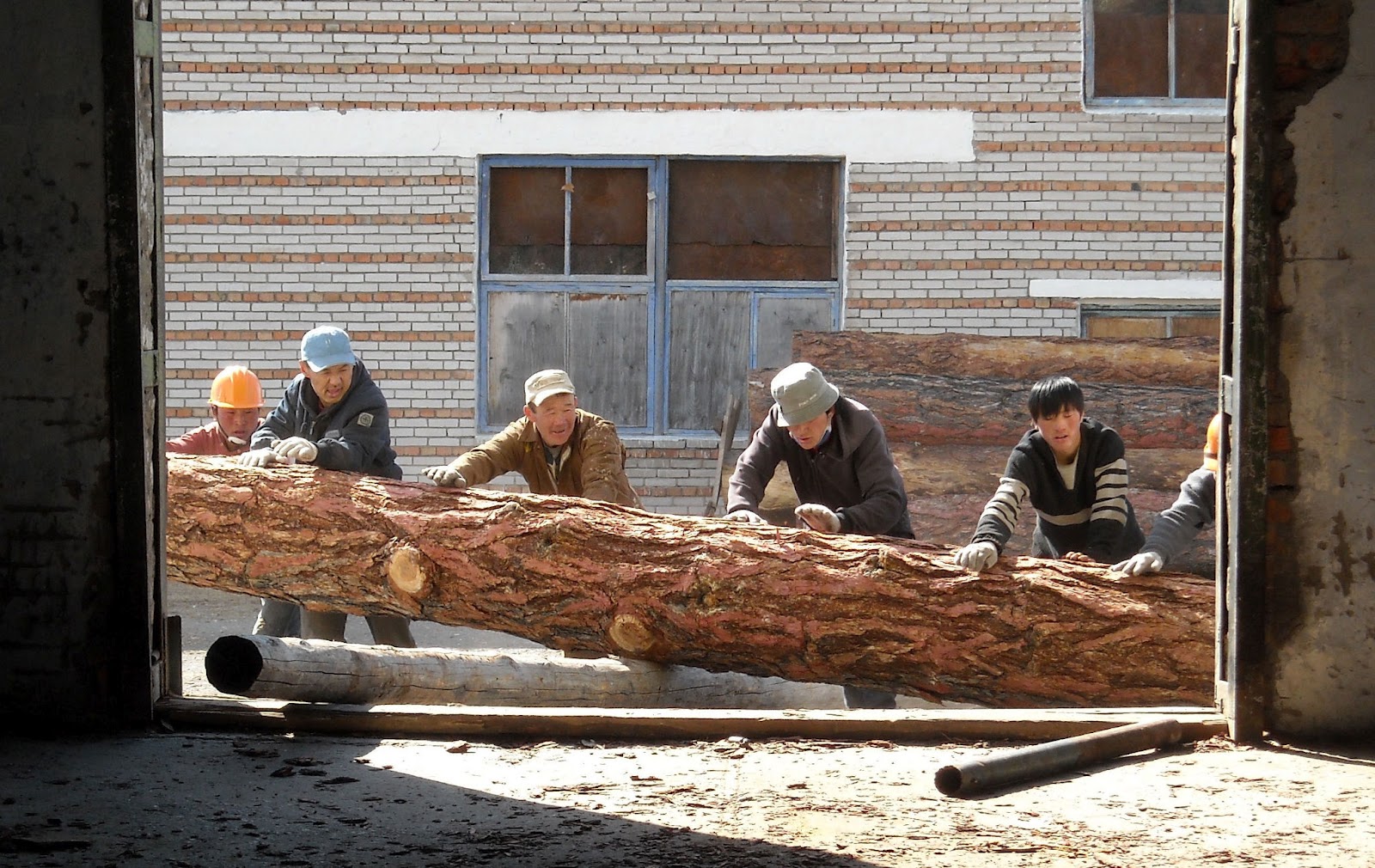
Missionary to Mongolia, Asia using a LT40 Hydraulic to build School and local Market Facility


Two decades after Mongolian independence from Soviet control, much of the isolated northern Mongolian town of Khatgal still lies in ruins, families live in extreme poverty, and the struggling government is limited in the support and opportunities it can provide. 

With tourism on the rise in the area, many have turned to traditional craft making. Local artisans labor in their one room cabins or Mongolian tents, working in homes smaller than the average American bedroom. During the short-lived summer months, women and children wander for miles through scattered camps placing their wares on the ground to display to foreign travelers. With an average annual income of less than $500, dreams of making a living for their families too often fades under the hardships. 


Mission Director Mickey Cofer and his wife Trina are on location working to make a difference. Their backgrounds as professional artists prepared them to be able to reach out to the needs of poverty-stricken artisans. They have set up a nonprofit organization called Local Craftsmen Foundation where individuals can receive training in quality craftsmanship and effective marketing. Through the generous gifts of American churches, the foundation has purchased a 100,000 square foot abandoned Soviet factory – a five building complex sitting on twelve acres of lakefront property. 

They are planning to turn the roadfront building into an Arts and Crafts Center to create a vibrant showcase and market opportunity for local artisans. The midsection of the factory is allocated for a Leadership Training Institute, and the lakeside facility is being renovated into a Summer Youth Camp and Community Center. 


The gift of a brand new Wood-Mizer LT40 hydraulic sawmill is making the renovation of this incredible site possible. It has afforded Mongolian Missions the opportunity to labor efficiently and inexpensively using local labor and materials. Through the help of this amazing tool the Cofer’s are working to help revitalize the region. Once renovations are complete, the sawmill will continue to be the main piece of equipment used for the long-term woodcraft project; not only producing crafts for tourists, but the furniture, frames and floors of their traditional Mongolian yurts for families around the country.


Through partnerships with people and organizations like Wood-Mizer, dreams are becoming a reality, and major steps are being taken toward strengthening one of the most charming and unique societies left on the face of the earth.

Inspired? Get involved with Mickey’s work: vesselsofhonor@hotmail.com. 

Contact address: Mickey Cofer, Mongolian Missions, PO Box 189 Winchester OH 45697

Article shared by Jacob Mooney <a href="https://plus.google.com/100627637264659532539?rel=author">Google</a>

Maximizing Sawmill Blade Performance


Premature Sawmill Blade Breaks

Why do they happen and how can they be prevented? Look over these trouble-shooting tips to ensure that you are getting the most from your blades when using your own blade sharpener and setter.

1. Running a blade dull or too long causes increased stress in the blade
  • • Pull the blade at regular intervals to maximize flex life and lower material amount removed to get blade sharp again.
  • • Change the blade immediately after striking a foreign object or material
  • • Be sure to grind lightly and into the gullet to remove any stress cracks.


2. Running a blade with damaged or worn blade guides can lead to failure
  • • Replace roller guides when flat spots develop on the shell.
  • • Replace roller guides when grooves develop in the flange or as flanges wear thin.
  • • Replace roller guide or bearing if it will not spin freely or is loose.
  • • Replace blade guide pads when fractured, worn thin or worn unevenly.
  • • Blade guide pads should not be too tight and “heat” the blade. Be sure to adjust for different thickness of blades.


3. Other sawmill conditions that can lead to blade breakage
  • • Worn or cheap blade wheel belts.
  • • Loose or damaged drive belts.
  • • Insufficient blade tension or tension system problems.
  • • Loose sliding arm that goes in and out.
  • • Excessive build up on blade or blade wheel belts
  • • Bearing failure in the blade wheels
  • • Blade contacting any steel or guards while sawing.


4. ReSharpening issues that can lead to premature blade failure
  • • Grinding too heavy, burning the tooth and gullets.
  • • Incomplete sharpening of total blade profile. Use a dye or nail polish to ensure getting it all.
  • • Removing stress cracks forming in the gullet.
  • • Missing the outside corners on the backside of set teeth.
  • • Dress grinding wheel frequently to eliminate grazing and particles embedding into the wheel.
  • • Dress the grinding appropriately for each profile or try CBN technology.
  • • Maintain bend location when setting the blade and stay away from the tip.


5. Other factors that affect blade life
  • • Allowing blades to rust when storing.
  • • Leaving sawdust and pitch buildup on teeth when storing blades. Flood the blade with lubrication before removing.
  • • Remove blade tension when not using the mill.
  • • Lubricate the blade while sawing.
  • • Maintain proper tracking of the blade on blade wheels.


Use the Right Sawblade for the Job.

It is crucial to the success of the milling operation to correctly match the right saw blade with the species and conditions of the material being sawn. Thicker blades handle tougher sawing conditions but thinner blades offer more flex life. Thicker blades also require more horsepower and can saw faster! Some blade profiles also require more horsepower. 

  • The 7 degree and 4 degree blade are suited for higher horsepower machines in hardwoods and even softwoods. 
  • The 9 degree profile offers best performance on low horsepower, lower demanding and smaller logs. 
  • The 10 degree is the best all-around blade profile for mixed hardwoods and general sawing conditions. 
  • Don’t be afraid to try different profiles in your sawing conditions to see what works best for you. 


Wood-Mizer's ReSharp is always available to meet your blade maintenance needs and make it easier for you to experiment. You can even join our automatic blade replacement program that gives you even more convenience and flexibility with your blade supply. Visit http://www.woodmizer.com/us/Blades.aspx to learn more about blades, Wood-Mizer's ReSharp service, blade maintenance equipment, and the types of blades available from Wood-Mizer.

Wednesday, July 11, 2012

Wood-Mizer Goes Mobile

Our website is now mobile friendly! Calling customer service, ordering blades, or getting a map for your local Wood-Mizer location is now easy to find right on your mobile device! Browse our product lines, check out the latest promotion, and more. Just visit www.woodmizer.com on your phone!


Feel free to leave feedback for our new mobile website version. m.woodmizer.com.