Showing posts with label portable sawmill blog. Show all posts

Friday, November 15, 2013

A Day in the Life of a Bush Sawmill

It’s around 6 am and the bug’s chirping and the bat wing flapping give way to the singing of birds in the dense foliage above us. When an adult-sized bat flaps its 4-6’ wingspan in the middle of the night, you hear it. Trust me on that!

Yesterday had been a long day for the six members of the sawmill crew. We had loaded the various pieces of the Wood-Mizer LT15 sawmill into our 50’ dugout canoe. The 40hp outboard motor had run well with no mechanical issues. However, the trip had been eventful because of a tree that was hanging low across one particular spot in the river. The mast of the sawmill just would not make it under the low-hanging limb. Fortunately we had a chain hoist and a chainsaw that allowed us to cut and pull the tree out of the way.

So after five hours on the river, we arrived at the pre-determined location of this milling trip’s timber stand. The mill is carried in sections back to the site, after the chainsaw operators had felled two of the trees. We have found that felling is crucial before you set up the mill in the jungle.

No one wants to carry the mill once it’s together, especially if it’s in the way of an oncoming tree!!

A day in the life of a bush sawmill


The next morning, two of the crew begin boiling water and cooking in the fire pit to start the morning breakfast meal.

It was good that the log owners built the hut the day before while we were felling the trees and carrying the LT15 to the site, otherwise we would not have had someplace to sleep off of the ground during the night. Poisonous snakes make poor bunkmates. They live on the ground, so all the huts are built on stilts. It just makes sense.

The rest of us begin assembling the sawmill. We selected the site last night and spent the last hours of the day using axes and machetes to clear the site. This makes setup a lot easier. Experience has also taught us to carry four boards with us to put the feet of the stands on. When you work in the swamp and rainforest, the "feet" sometimes find a soft spot. We have four particular boards that we lay down for the tracks to sit on. These boards have been augured out to the exact spacing and diameter of the "feet." We mill hardwoods, namely ironwood or Kwila (to the locals), so the better anchored the mill is the better. We drive two stakes at the very ends of the track to keep it from moving when we begin to roll the logs on.

The sawmill and crew travel upriver in a 50


The LT15 is now level and ready to go. Check the oil in the engine! We are in the middle of nowhere, literally! So any damage to equipment, especially from negligence, is very bad. Any damage to that engine, and the whole trip will have to be abandoned. We normally let it idle for five minutes while we roll the log on the mill.

The agreement we always have with the landowners/tree owners is always a one-to-one exchange. One tree milled for us to mill for our projects, and one tree milled for their use allows for both sides to benefit equally. Part of the agreement is that they are there to help with the moving of the logs (no forklifts here) and the positioning of the logs on the mill. They also help with timber stacking.

While the mill is warming up after the log is clamped and ready to go, it’s time to talk safety. We lay out the safety rules of working around the mill. Where and when you should approach the mill are just a couple of the topics we discuss. OK, the engine has idled way past five minutes now, but that’s alright. Someone had to take the water container back to the river to fill it so the blade would be washed and cooled properly.
We had checked the blade before we cut the first piece, but after the first time through it’s time to make sure that everything is in order. We’re good to go!

The operator starts to mill up the first section of log. It’s the job of the operator and the "water boy" to mill the log, and give the directions to the local guys working with the sawmill crew. The rest of us go back to the hut for a little meal. We’re going to be working all day in the heat. It’s important to stay hydrated and fed.

Portability is valued as the sawmill can be taken apart, transported by hand, and reassembled where ever required


The guys in the crew have specific roles. Three of the guys have been trained to operate the sawmill. They are the only ones that can accurately read a tape measure, consistently. Two other guys operate the chainsaw.

The calm of the jungle for a few short weeks is replaced by the whine of a chainsaw, the noise of a diesel engine, and the yells of the men as they shout directions at each other. There is a brief lull though. One of the bearings in the blade guide has gone bad. We take about 30 minutes to replace it. Fortunately for us we always have an ample supply of what I call consumable parts on standby! Wherever the LT15 goes, so does the large box of spare parts. No local hardware, or Wood-Mizer outlet nearby here!

We’re off and running again! A few hours later the pile of finished lumber has steadily grown larger. Everyone is grinning from ear to ear, while the sawmill just keeps on cutting away. Scraps are claimed for someone to whittle out an oar for paddling on the river. No one goes home empty handed, that’s for sure. Another lull in the action, a 15 minute rain shower passes. We are in the jungle and they don’t call it the rainforest for nothing!

Days start early, around 6am, because that is when the first light starts to show. We keep busy until 6pm, when the sun starts to set. That leaves us with about 30 minutes to bathe in the river, and prepare supper. No indoor plumbing here, and swimming after dark might lead to an encounter with a crocodile!

The arrival of the sawmill is a big event, and will mean a new schoolhouse, clinic, or homes for the village


The day is beginning to wind down. The spring in our step just isn’t quite the same at the end of the day when it has been 90F with very high humidity. Heat index says it felt like 114F. I would say that an estimate like that is not to far off judging by the way I feel.

We light the kerosene lamp before we head off to the river. We won’t get back from our "bath" till after dark. So having a light helps with preparation of supper, and finding your way back. Things are quiet again. It’s a nice "cool" evening. The bugs start the chirping again.

The guys laugh and joke about the day’s work. It always amazes me how exhausted people can be so happy. We know that we are a few steps closer to finishing up, and look forward to the day we wrap it up here and head back to our home in Samban, a small village in the East Sepik Province of Papua New Guinea. It’s good to sit and rest after being on our feet and working all day. A bat shrieks nearby very near to the ground by our hut. One of the guys grins as he grabs his spear. I guess bat is on the menu tonight!

Buying trees under a mutually beneficial agreement with the landowner, the village only cuts what it needs


Jungle Milling ToolTips:
1. Keep the chainsaw handy when transporting your sawmill upriver.
2. Build the hut before you start sawing, and make sure your sleeping bunks are off the ground.
3. Stay hydrated and fed.
4. Bring spare parts for everything.
5. A large bat will make a tasty dinner.

By Jesse Pryor
Missionary to Papua New Guinea

About the Author:
Born and raised in the jungles of Papua New Guinea, Jesse Pryor returned as a missionary with his wife Karie and three children to continue the work begun by Jesse’s parents John and Bonita Pryor. They are working within the church to strengthen discipleship and Sunday School programs. With the help of the locals and the sawmill crew, Jesse has put his experience in the construction field to good use, and they have completed churches, schools, and medical facilities in the remote jungle.

Friday, July 13, 2012

Maximizing Sawmill Blade Performance


Premature Sawmill Blade Breaks

Why do they happen and how can they be prevented? Look over these trouble-shooting tips to ensure that you are getting the most from your blades when using your own blade sharpener and setter.

1. Running a blade dull or too long causes increased stress in the blade
  • • Pull the blade at regular intervals to maximize flex life and lower material amount removed to get blade sharp again.
  • • Change the blade immediately after striking a foreign object or material
  • • Be sure to grind lightly and into the gullet to remove any stress cracks.


2. Running a blade with damaged or worn blade guides can lead to failure
  • • Replace roller guides when flat spots develop on the shell.
  • • Replace roller guides when grooves develop in the flange or as flanges wear thin.
  • • Replace roller guide or bearing if it will not spin freely or is loose.
  • • Replace blade guide pads when fractured, worn thin or worn unevenly.
  • • Blade guide pads should not be too tight and “heat” the blade. Be sure to adjust for different thickness of blades.


3. Other sawmill conditions that can lead to blade breakage
  • • Worn or cheap blade wheel belts.
  • • Loose or damaged drive belts.
  • • Insufficient blade tension or tension system problems.
  • • Loose sliding arm that goes in and out.
  • • Excessive build up on blade or blade wheel belts
  • • Bearing failure in the blade wheels
  • • Blade contacting any steel or guards while sawing.


4. ReSharpening issues that can lead to premature blade failure
  • • Grinding too heavy, burning the tooth and gullets.
  • • Incomplete sharpening of total blade profile. Use a dye or nail polish to ensure getting it all.
  • • Removing stress cracks forming in the gullet.
  • • Missing the outside corners on the backside of set teeth.
  • • Dress grinding wheel frequently to eliminate grazing and particles embedding into the wheel.
  • • Dress the grinding appropriately for each profile or try CBN technology.
  • • Maintain bend location when setting the blade and stay away from the tip.


5. Other factors that affect blade life
  • • Allowing blades to rust when storing.
  • • Leaving sawdust and pitch buildup on teeth when storing blades. Flood the blade with lubrication before removing.
  • • Remove blade tension when not using the mill.
  • • Lubricate the blade while sawing.
  • • Maintain proper tracking of the blade on blade wheels.


Use the Right Sawblade for the Job.

It is crucial to the success of the milling operation to correctly match the right saw blade with the species and conditions of the material being sawn. Thicker blades handle tougher sawing conditions but thinner blades offer more flex life. Thicker blades also require more horsepower and can saw faster! Some blade profiles also require more horsepower. 

  • The 7 degree and 4 degree blade are suited for higher horsepower machines in hardwoods and even softwoods. 
  • The 9 degree profile offers best performance on low horsepower, lower demanding and smaller logs. 
  • The 10 degree is the best all-around blade profile for mixed hardwoods and general sawing conditions. 
  • Don’t be afraid to try different profiles in your sawing conditions to see what works best for you. 


Wood-Mizer's ReSharp is always available to meet your blade maintenance needs and make it easier for you to experiment. You can even join our automatic blade replacement program that gives you even more convenience and flexibility with your blade supply. Visit http://www.woodmizer.com/us/Blades.aspx to learn more about blades, Wood-Mizer's ReSharp service, blade maintenance equipment, and the types of blades available from Wood-Mizer.

Friday, July 6, 2012

A Homesteader with a Sawmill

Building a Self-sufficient Farm and Home without the Lumberyard
by Kevin Kiwak, Wood-Mizer LT40 Super Hydraulic sawmill owner.

“Every wood element in the house – from the frame to the trim, doors, shelves, cabinets, you name it – was milled on the Wood-Mizer [sawmill]. One hundred percent of the wood in the house comes from my property and was processed on my mill.” Kevin Kiwak

"In the summer of 1993, I attended an introductory timber framing class at the Heartwood School in Beckett, Massachusetts. It was during that experience that two significant events occurred - I saw a Wood-Mizer portable sawmill for the first time and I made the acquaintance of Jack Sobon, the well-known timber frame architect and author. For the next decade, I dreamed of building my own house and starting a self-sufficient farm but circumstances always seemed to interfere. I purchased my Wood-Mizer LT40HD Super Remote [sawmill] in 2000 but it still would be another four years before Jack Sobon would design my house and I could chance leaving my career to pursue my dream.

The Learning Curve

"This is my first house, with little previous building experience other than my two weeks at the Heartwood School. It is my very first sawmilling experience. Admittedly, the learning curve was steep when I first started milling, but I soon found the machine design and operation to be intuitively obvious. Proficiency followed quickly. The house plan was taken from a 17th century French Country design. The French call it 'half-timbered,' that is, a timber frame with infill for the enclosure so that the frame remains exposed. I knew when I started the project that it would seem odd covering such a beautiful frame with siding or some other enclosure, so this was the perfect design solution. 


Timber Frame Construction

"As the frame is exposed it would require a rot-resistant species. Living in the Berkshires of western Massachusetts I was limited in choice- white oak, black cherry, and black locust being the available rot-resistant species. My property, quite fortuitously, was heavily populated with wild black cherry. The timbers are heartwood cherry on all exposed exterior surfaces. The wild cherry timbers were milled on my Wood-Mizer and then the frame was assembled using a scribing technique so as to be able to incorporate many unusual and curved members. After milling, not a single power tool was used in the construction of the house. For example, over 600 mortise and tenon joints were hand cut with a mallet and two inch framing chisel. From tree on the stump to assembled frame took the better part of two years. The entire project is now in its sixth year!


"The infill is autoclaved, aerated concrete block, chosen for its high R-value, covered with three coats of aged lime plaster both inside and out. The rafters, roof boards, floor joists, tower members, wane-edged siding, and exterior trim were all milled on the LT40. The interior timbers, also milled on my Wood-Mizer, are an assortment of species- beech, birch, red oak, hard and soft maple, sycamore, dawn redwood, eastern white pine, hemlock, cherry, and apple: in proportion to the timbers on the property, a formula devised by Jack Sobon. The wide variety of species used and the fact that milling occurred throughout the year (from 100 degrees in August to minus 15 degrees in February) required an assortment of sawmill blades. The Wood-Mizer technical staff was central to my sawmill blade education.

"The longest members in the frame are 34 foot 8x9 inch cross ties. The summer beam, cut from eastern white pine, measures 8x24 inches and is 16 feet long. The large hip roof and the other smaller roofs required some 32,000 shingles. These were made from knot-free, heartwood blocks of eastern white pine and milled using the shingle-maker attachment on my Wood-Mizer. I quickly discovered that shingle-making leaves a tremendous amount of ‘scrap’ wood which would generally be considered unusable, but with the Wood-Mizer I could turn even these scraps into valuable lumber.


Making it Work

"Every wood element in the house - from the frame to the trim, doors, shelves, cabinets, you name it - was milled on the LT40. One hundred percent of the wood in the house comes from my property and was processed on my mill. We are still working on the interior finish work on the house but starting this Fall I will begin a 35x50 foot 3-bay timber framed English barn. We would like to eventually house a pair of oxen – which we will use for logging in place of a tractor – in the future barn. All our present outbuildings - chicken coop, garden shed, sheep shed- were made using the Wood-Mizer. All future buildings – barn, bakehouse, and woodshed – will be built using the mill. We had a 6,000 square foot vegetable garden this year, in addition to which we grew broomcorn (for brooms!) and our own wheat. We dug a root cellar this summer and harvested 400 pounds of potatoes in the fall.

A New Horizon

"My Wood-Mizer sawmill has literally opened a new world to me. I am not restricted (financially, aesthetically, or imaginatively) by using a lumberyard or having another sawyer mill my elements. The possibilities seem limitless. For me, there is no turning back."


Kevin Kiwak with his Wood-Mizer LT40 Super Hydraulic portable sawmill

About Portable Sawmills

Small, affordable band sawmills have reduced or eliminated that reliance on box store lumber for thousands of people across North America. In the early 1980’s Wood-Mizer first came out with an affordable sawmill for the average Joe and self reliance for one’s own lumber suddenly became a possibility. Storm damaged timber is one of the most common reasons people first begin considering sawing their own lumber. They know that their trees are much more valuable than just being chopped up for firewood, and the idea of processing those trees into lumber is born.

About the Sawing Process

Wood-Mizer sawmills are based on a very simple, intuitive design. After a log is rolled onto the bed, and clamped firmly, the bandsaw blade is engaged, and the bandsaw head is pushed down the length of the log, sawing off a first board. Then the head is raised up, pulled back, and the whole process starts over again, and the boards begin stacking up. Boards can be stacked vertically on the sawmill, and edged to various desired widths in the same manner. Unlike convention circle sawmills, which remove 1/4” of wood each time the blade saws through the log, the Wood-Mizer ‘thin-kerf’ bandsaw blade removes less than a 1/10” of an inch. This increases the amount of material that each log can produce, and greatly reduces the amount of waste from the process. Hydraulic versions of these sawmills greatly reduce the amount of labor involved and increase production rates.

Studies on the Impact of using a Portable Sawmill

US Forest Service researcher Stephen Bratkovich, has reported that typical sawmills in the US operate at about 50% efficiency in terms of lumber recovery. In a study of a pallet lumber mill in Missouri, Bratkovich demonstrated 69% efficiency for a thin kerf mill with a .050" blade cutting thin lumber. "The US annual cut of timber for lumber products is equivalent to approximately 240 million trees," Bratkovich writes. "We could save the equivalent of 69 million trees annually if our recovery efficiency improved from 50% to 70% in our primary processing industry."


Learn more about portable sawmills and see more success stories at www.woodmizer.com or www.facebook.com/woodmizer


Wednesday, June 27, 2012

Forest Thinning made Profitable with a Wood-Mizer Portable Sawmill


Forest thinning increases overall forest health.

According to the USDA Forest Service, at least 40 million plus acres of southern and western forests in the United States are at high risk of catastrophic fire, insect infestation, or disease epidemics because of poor ecosystem health.  One reason has been lack of forest maintenance.  To bring the forests back to health, it is necessary to thin them by removing offending undergrowth and reduce overpopulations of smaller trees. Thinning not only has the potential to improve the overall health of the forests, it can also be a source of income for landowners and portable sawmill owners alike.  

Ken South of Jordan, Montana, is owner of K & K Sawing.  He works in private forests, harvesting small timber and converting it to lumber with his Wood-Mizer LT40 Super Hydraulic sawmill.  His operation can serve as a model of how thinning forests can be done at a profit without harvesting old growth timber.
Portable sawmills become key to profitable forest thinning

“I’d lost my job on a ranch when it went under… and needed something to do,” Ken explains.  “I’d operated a Wood-Mizer portable mill on the ranch and thought I saw something with a lot of potential.  We started custom sawing lumber to see if we could make a go of it and haven’t stopped since.”  

Fortunately for K & K Sawing, logging cutbacks on Federal lands have left some manufacturers scrambling for reliable supplies of quality fiber. Also, more and more private land owners are begining to treat their own forests for improved health and reduced fire threat.  The two needs, Ken points out, can be simultaneously fulfilled through thinning programs.

Often, hundreds of miles can separate the forests needing treatment from the nearest sawmill of any size.  That means transportation costs are high.  Ken South’s portable sawmill has proven to be the key in bringing supply and demand in a way that works. The Wood-Mizer, Ken points out, allows him to mill small timber into value added products only a few feet from where it is harvested, a vital factor in making the whole process economical when the timber is small and potential customers remote.  

Ken South's Wood-Mizer goes to the forest.


In a traditional harvest, costs are added at each stage of the process of logging.  And a thinning harvest often results in large quantities of small material which do not provide enough yield to make the whole process profitable.

With his Wood-Mizer portable mill, Ken South is able to avoid the production steps that add much of the cost between stump and secondary processor in a more traditional operation.  Since the cost of shipping a raw finished product from the woods is basically the same as transporting raw logs, shipment costs are reduced because only finished product, ready for secondary processing, leaves the woods. 

Ken and a contractor friend with logging equipment have worked out a split on the wood that allows each to operate a profitable business.  The contractor harvests the trees and delivers them to a central point at the saw.  The “landing” is changed periodically both to avoid ground damage and to reduce the amount of time and labor involved in harvesting the wood.
Trucking costs are greatly reduced. 


At the landing Ken, his son, and sometimes a third employee, prepare logs for sawing based on orders from buyers and saw to customer requests.  Cants are shipped to the buyer for reprocessing, lumber is sold to a variety of customers including local farmers and ranchers, wholesalers, and manufacturers, while slabs are used mostly for firewood.  Virtually everything goes into some kind of product.  Lumber destined for the primary customer is loaded onto a semi-trailer which is left at the site to be filled then picked up by a local trucker who delivers it to the customer’s mill in South Dakota, nearly 200 miles away.

The impacts on the forests are dramatic enough in terms of health and quality enhancements that neighboring ranchers have already asked Ken to work their forests when he’s done with his current project/location.  According to Ken, future work is already lined up, and he plans to continue making a good living improving both the economic and environmental health of the area near his home. 

Check out the Video Center at www.woodmizer.com to see more ways Wood-Mizer sawmill owners are using their sawmills to make a living. For more information on managing your private forest with a portable sawmill, visit: http://www.woodmizer.com/us/ResourceCenter/IndustrySolutions/ManagingYourPrivateForest.aspx


Wednesday, June 20, 2012

Making a Second Career out of Sawing Lumber


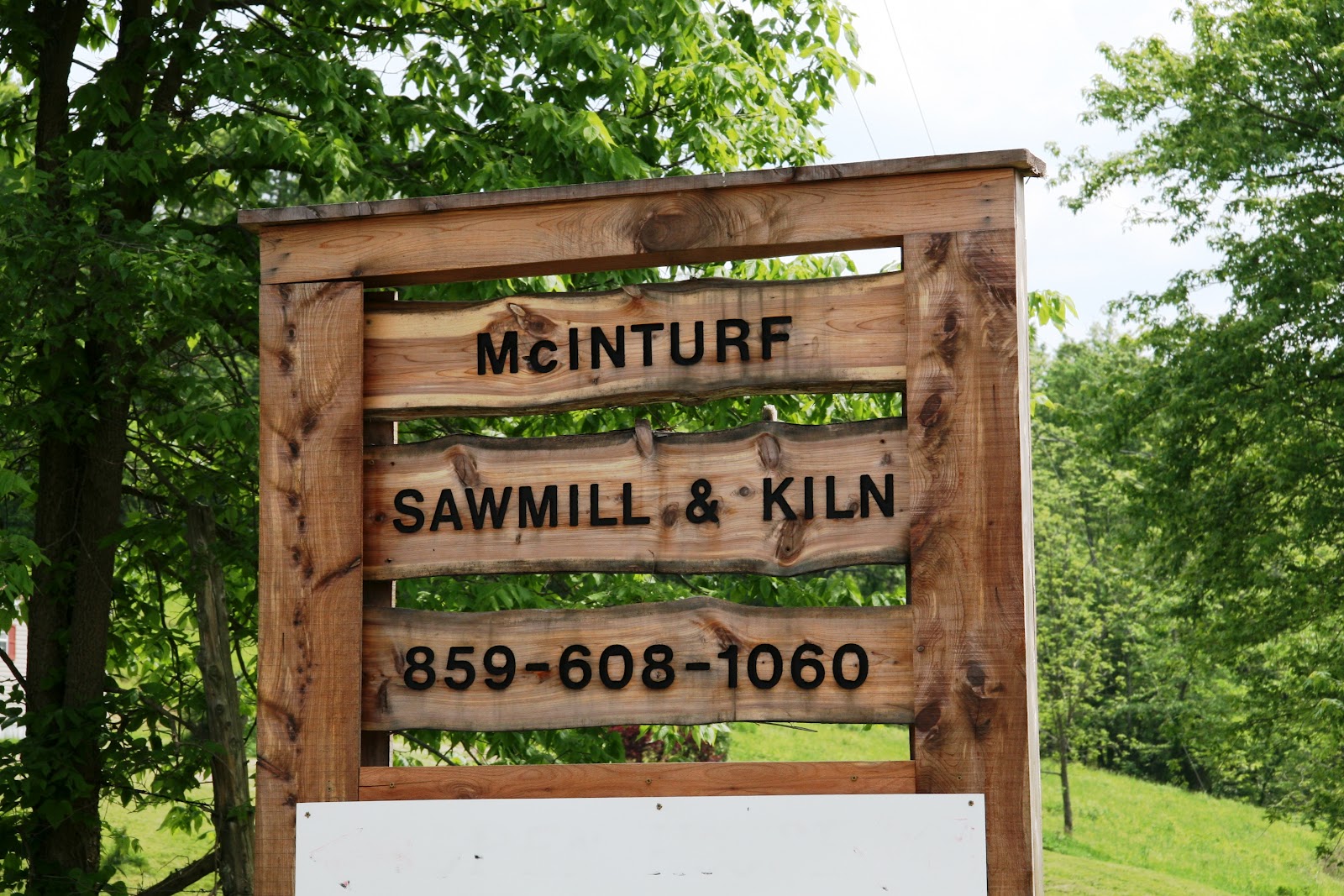
Creeping up on 50, Gary McInturf found himself in a place where many other men do around that age: looking for something new to do that would support his family, and be that new venture he could again feel passionate about. His chance to do just that came in a way he didn’t expect – a windstorm!

An unusually strong windstorm resulted in a rewarding second career.
With several oak trees laying on the ground after the storm passed, Gary’s wife had the idea that they might be able to make a table out of the wood, instead of just cutting them up for firewood. At the time, Gary admits that he didn’t have a clue about how to turn his trees into lumber. He called up his local forestry department and asked them what he could do. They gave him the name of a Wood-Mizer sawmill owner in Gary’s area.

Gary's Wood-Mizer LT40 Hydraulic sawmill allows him to cut custom lumber for local clients
“When I saw him cut my lumber up, I thought it was the neatest thing I had ever seen, and 30 days later I owned one,” Gary recalls. It didn’t take him long to begin converting buildings to lumber drying areas, and places where local hobbyists could come and select their boards. He was able to obtain several customers at local cabinet shops the old fashioned way: cold sales calls. Gary will tell you that he does not enjoy selling his services over the phone, but says that they really paid off for him. When he first opened his business, Gary held an open house and invited locals to check out his new mill and chat over coffee. Even with rain that day, the event was well attended, and helped get his name out into the community.


Unloading logs that will become custom sized lumber
Over the next two years, Gary has been able to expand with additional buildings, a Wood-Mizer kiln, a Wood-Mizer edger, a chipper, and a frontend loader. He relies on a logger friend to keep him supplied with logs, and rewards customers with a discount when they buy lumber from him right out of the kiln.
Gary attributes his business success to several things. By providing a quality product, and treating his customers above and beyond how they are treated by larger lumberyards, his customers keep coming back, and spread the word about his business. By making smart business decisions regarding his product offered and  his timely equipment purchases, he has continued to expand his product offering without overextending his resources.

The table that started it all. 
Gary is working to increase the success of his venture by working together with other sawmill business owners in the area. With the assistance of Dr. Terry Connors from the Kentucky University Forestry Department, Gary and several other sawmill owners in Kentucky have started the “Central Kentucky Wood Producers Association.” By employing the strength-in-numbers principle, they are able to help each other out, pool their resources for advertising, and benefit from the knowledge and various skill sets they each bring to the table.


Ever the progressive thinker, Gary bit the bullet and learned the basics of designing his own website, and shares that his website has already helped double his jobs since he launched it in late 2011. Visit his website at www.kysawmill.com.