Showing posts with label custom sawn lumber. Show all posts

Friday, March 1, 2013

Wood-Mizer Launches Online Local Portable Sawmill Service Directory


Wood-Mizer has launched an online local sawmill business directory that will help connect Wood-Mizer owners with local people in need of a portable sawmill service to cut their logs into lumber at www.woodmizer.com/localsawmills.

The easy-to-use directory allows someone to browse sawmill businesses by state, and lists information that someone would need in order to find the sawmill service that will fit their needs. Once a sawmill service is selected, contact information is delivered instantly by email.

For years, Wood-Mizer has helped people find portable sawmill services over the phone. In March of 2012, Wood-Mizer created a page on their website where people could request information for local sawyers. With hundreds of hits a week, and requests pouring in in the aftermath of disasters  such as Hurricane Sandy, the decision was made to launch a searchable online sawmill directory, which would be made up of members of the Wood-Mizer Pro Sawyer Network, pre-qualified sawmill owners that use their sawmills for a living. More information at www.woodmizer.com/pro.

Portable sawmill businesses provide many valuable services to their local communities. With a portable sawmill, storm damaged trees can be turned into usable lumber for projects, instead of heading to the landfill or the tree chipper. Many Wood-Mizer owners sell specialty lumber locally, providing species, custom sizes, and prices that cannot be found at the local lumberyard or box store.

For information about getting someone to cut your own logs into useable lumber, read “What you Need to Know when Hiring a Portable Sawmill Service”. To find out how easy it is to start sawing your own lumber with an entry-level Wood-Mizer sawmill, visit www.woodmizer.com


Monday, December 3, 2012

Custom Sawing & Furniture Building: A Better Retirement Plan


By Danny Hamsley, Hamsley Forestry, LLC.
After purchasing the LT15 sawmill in 2002 for personal projects, I started selling a little lumber that I had in excess of what I needed, and was surprised at the interest that I got from local woodworkers.  I developed a plan to retire at age 57 and focus on sawing and selling hardwood lumber and working as a Forestry Consultant since I am a Registered Forester.     I was able to retire in April 2011. I am also now able to spend more time turning that high quality lumber produced on the sawmill into high quality, custom furniture.  My business, though small, is all about timber, lumber, and furniture.  If I tried to go and buy the lumber, the profit would not be there at my scale to justify it.  The sawmill makes the whole strategy work, and it is the keystone of the whole process.
  

I saw to maintain an inventory of the various hardwood species that local woodworkers are after.  When I am not sawing, I may be working on the lumber, stacking, air drying, sorting, etc.  People call and come buy lumber just about anytime 7 days a week.  I also spend a lot of time on the furniture side of things.  I always have some type of furniture project on the drawing board or in progress. 

There is also time required to measure and mark timber, harvest timber, skid out the logs and prepare them for sawing.  I spend as much time harvesting, skidding, and preparing the logs as I do sawing them.  I may be small, but I am fully integrated!
I saw primarily hardwood, the majority off of my timberland.  My strategy is to saw, air dry, and sell rough cut hardwood lumber for local woodworkers.  I am supplying a exclusive service because you cannot find hardwood lumber like walnut, oak, cherry, yellow poplar, and maple in this area.  I cut all thicknesses from 4/4 up to 16/4.  Lengths are 8 feet and 10 feet.  To date, my primary focus has been building furniture for family and friends, but the sawmill will allow me to increase the amount of custom furniture that I can build and sell.  This will be a growth area for me.
The sawmill allows me to gain significantly more value from my timberland than if I just offered the timber for sale to a logger or commercial sawmill.  For example, I can sell a large white oak on the stump as timber to a logger or mill, and it will be worth about $60 on the stump.  I can harvest the tree myself, saw it on the LT15, air dry the lumber, and sell the lumber from that tree for $700 - $800.  That is a huge lift in value that allows me to make a return from the timberland that I own and manage as well as a return on my sawmill and equipment investment.  It also allows me to offer lumber to local woodworkers that would otherwise have to drive two hours to Atlanta and pay high retail prices.

The Re-Sharp program is perfect for me.  I focus on high quality and not quantity, so sharpening my own blades would not be cost effective.  I have found the Re-sharp service to be outstanding in turn-around time and in blade quality.

It is amazing to me the lift that I can achieve in my timber investment on my 200 acres of property by sawing a high quality product and selling the product rather than just selling the timber.  The sawmill allows me to gain a lift over ten-fold more than the market value of the timber stumpage. 
I am going to expand the furniture side of my business.  Although small, I am happy with the volume of lumber at this point… it fits my property, equipment, and business strategy well.  I can make a little money and really enjoy what I am doing.  I get to meet all kinds of interesting people.  This creates a lot of exposure for the mill and most are interested in the process, and it allows me to brag on how great a product the mill is and the great service provided by Wood-Mizer.  And, believe me, I do brag! 

Wednesday, June 27, 2012

Forest Thinning made Profitable with a Wood-Mizer Portable Sawmill


Forest thinning increases overall forest health.

According to the USDA Forest Service, at least 40 million plus acres of southern and western forests in the United States are at high risk of catastrophic fire, insect infestation, or disease epidemics because of poor ecosystem health.  One reason has been lack of forest maintenance.  To bring the forests back to health, it is necessary to thin them by removing offending undergrowth and reduce overpopulations of smaller trees. Thinning not only has the potential to improve the overall health of the forests, it can also be a source of income for landowners and portable sawmill owners alike.  

Ken South of Jordan, Montana, is owner of K & K Sawing.  He works in private forests, harvesting small timber and converting it to lumber with his Wood-Mizer LT40 Super Hydraulic sawmill.  His operation can serve as a model of how thinning forests can be done at a profit without harvesting old growth timber.
Portable sawmills become key to profitable forest thinning

“I’d lost my job on a ranch when it went under… and needed something to do,” Ken explains.  “I’d operated a Wood-Mizer portable mill on the ranch and thought I saw something with a lot of potential.  We started custom sawing lumber to see if we could make a go of it and haven’t stopped since.”  

Fortunately for K & K Sawing, logging cutbacks on Federal lands have left some manufacturers scrambling for reliable supplies of quality fiber. Also, more and more private land owners are begining to treat their own forests for improved health and reduced fire threat.  The two needs, Ken points out, can be simultaneously fulfilled through thinning programs.

Often, hundreds of miles can separate the forests needing treatment from the nearest sawmill of any size.  That means transportation costs are high.  Ken South’s portable sawmill has proven to be the key in bringing supply and demand in a way that works. The Wood-Mizer, Ken points out, allows him to mill small timber into value added products only a few feet from where it is harvested, a vital factor in making the whole process economical when the timber is small and potential customers remote.  

Ken South's Wood-Mizer goes to the forest.


In a traditional harvest, costs are added at each stage of the process of logging.  And a thinning harvest often results in large quantities of small material which do not provide enough yield to make the whole process profitable.

With his Wood-Mizer portable mill, Ken South is able to avoid the production steps that add much of the cost between stump and secondary processor in a more traditional operation.  Since the cost of shipping a raw finished product from the woods is basically the same as transporting raw logs, shipment costs are reduced because only finished product, ready for secondary processing, leaves the woods. 

Ken and a contractor friend with logging equipment have worked out a split on the wood that allows each to operate a profitable business.  The contractor harvests the trees and delivers them to a central point at the saw.  The “landing” is changed periodically both to avoid ground damage and to reduce the amount of time and labor involved in harvesting the wood.
Trucking costs are greatly reduced. 


At the landing Ken, his son, and sometimes a third employee, prepare logs for sawing based on orders from buyers and saw to customer requests.  Cants are shipped to the buyer for reprocessing, lumber is sold to a variety of customers including local farmers and ranchers, wholesalers, and manufacturers, while slabs are used mostly for firewood.  Virtually everything goes into some kind of product.  Lumber destined for the primary customer is loaded onto a semi-trailer which is left at the site to be filled then picked up by a local trucker who delivers it to the customer’s mill in South Dakota, nearly 200 miles away.

The impacts on the forests are dramatic enough in terms of health and quality enhancements that neighboring ranchers have already asked Ken to work their forests when he’s done with his current project/location.  According to Ken, future work is already lined up, and he plans to continue making a good living improving both the economic and environmental health of the area near his home. 

Check out the Video Center at www.woodmizer.com to see more ways Wood-Mizer sawmill owners are using their sawmills to make a living. For more information on managing your private forest with a portable sawmill, visit: http://www.woodmizer.com/us/ResourceCenter/IndustrySolutions/ManagingYourPrivateForest.aspx


Wednesday, June 20, 2012

Making a Second Career out of Sawing Lumber


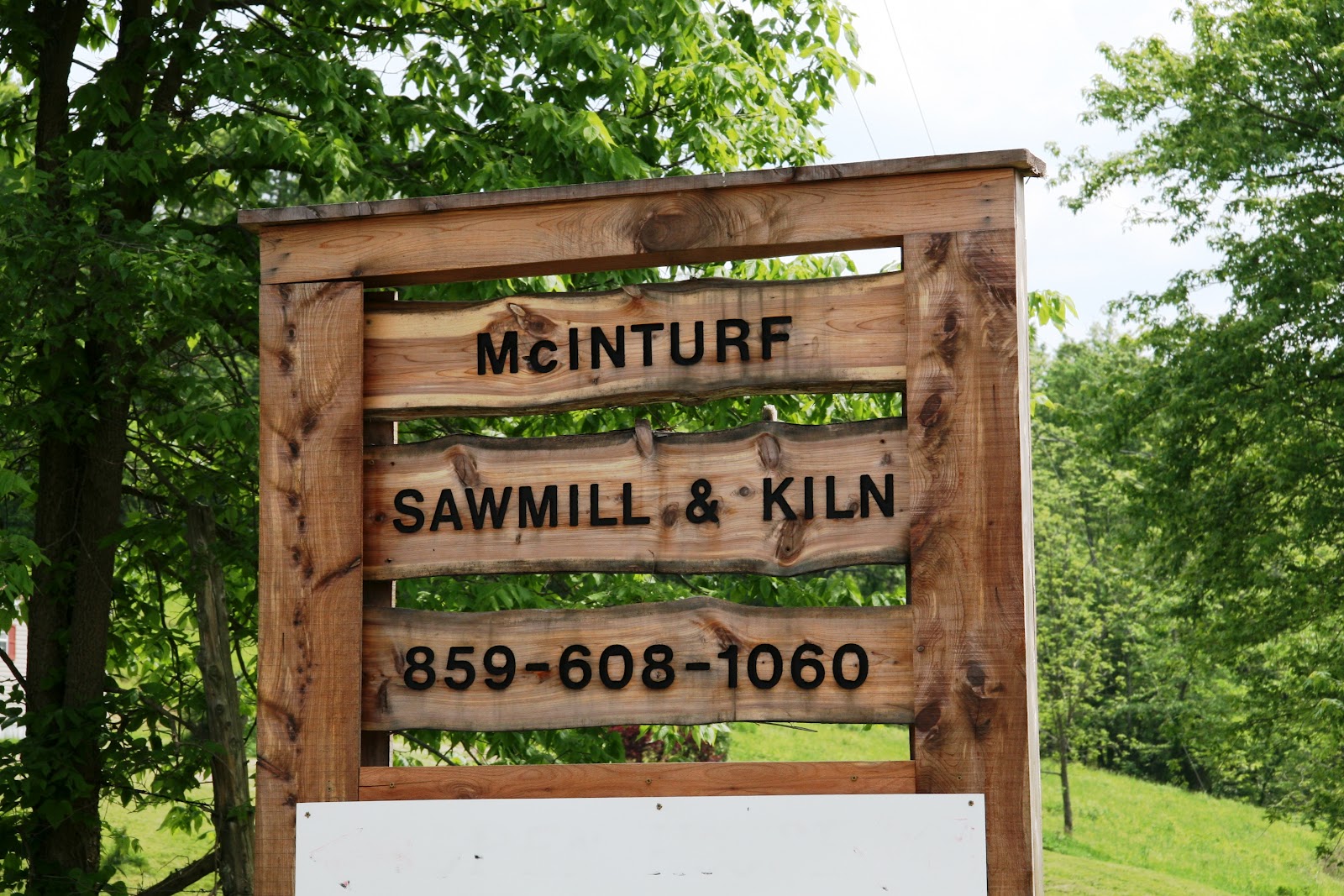
Creeping up on 50, Gary McInturf found himself in a place where many other men do around that age: looking for something new to do that would support his family, and be that new venture he could again feel passionate about. His chance to do just that came in a way he didn’t expect – a windstorm!

An unusually strong windstorm resulted in a rewarding second career.
With several oak trees laying on the ground after the storm passed, Gary’s wife had the idea that they might be able to make a table out of the wood, instead of just cutting them up for firewood. At the time, Gary admits that he didn’t have a clue about how to turn his trees into lumber. He called up his local forestry department and asked them what he could do. They gave him the name of a Wood-Mizer sawmill owner in Gary’s area.

Gary's Wood-Mizer LT40 Hydraulic sawmill allows him to cut custom lumber for local clients
“When I saw him cut my lumber up, I thought it was the neatest thing I had ever seen, and 30 days later I owned one,” Gary recalls. It didn’t take him long to begin converting buildings to lumber drying areas, and places where local hobbyists could come and select their boards. He was able to obtain several customers at local cabinet shops the old fashioned way: cold sales calls. Gary will tell you that he does not enjoy selling his services over the phone, but says that they really paid off for him. When he first opened his business, Gary held an open house and invited locals to check out his new mill and chat over coffee. Even with rain that day, the event was well attended, and helped get his name out into the community.


Unloading logs that will become custom sized lumber
Over the next two years, Gary has been able to expand with additional buildings, a Wood-Mizer kiln, a Wood-Mizer edger, a chipper, and a frontend loader. He relies on a logger friend to keep him supplied with logs, and rewards customers with a discount when they buy lumber from him right out of the kiln.
Gary attributes his business success to several things. By providing a quality product, and treating his customers above and beyond how they are treated by larger lumberyards, his customers keep coming back, and spread the word about his business. By making smart business decisions regarding his product offered and  his timely equipment purchases, he has continued to expand his product offering without overextending his resources.

The table that started it all. 
Gary is working to increase the success of his venture by working together with other sawmill business owners in the area. With the assistance of Dr. Terry Connors from the Kentucky University Forestry Department, Gary and several other sawmill owners in Kentucky have started the “Central Kentucky Wood Producers Association.” By employing the strength-in-numbers principle, they are able to help each other out, pool their resources for advertising, and benefit from the knowledge and various skill sets they each bring to the table.


Ever the progressive thinker, Gary bit the bullet and learned the basics of designing his own website, and shares that his website has already helped double his jobs since he launched it in late 2011. Visit his website at www.kysawmill.com.